Don’t Get Caught Scrambling
Prep and Go: Don’t Get Caught Scrambling When the Flames Are Closing In
Prep and Go: Don’t Get Caught Scrambling When the Flames Are Closing In
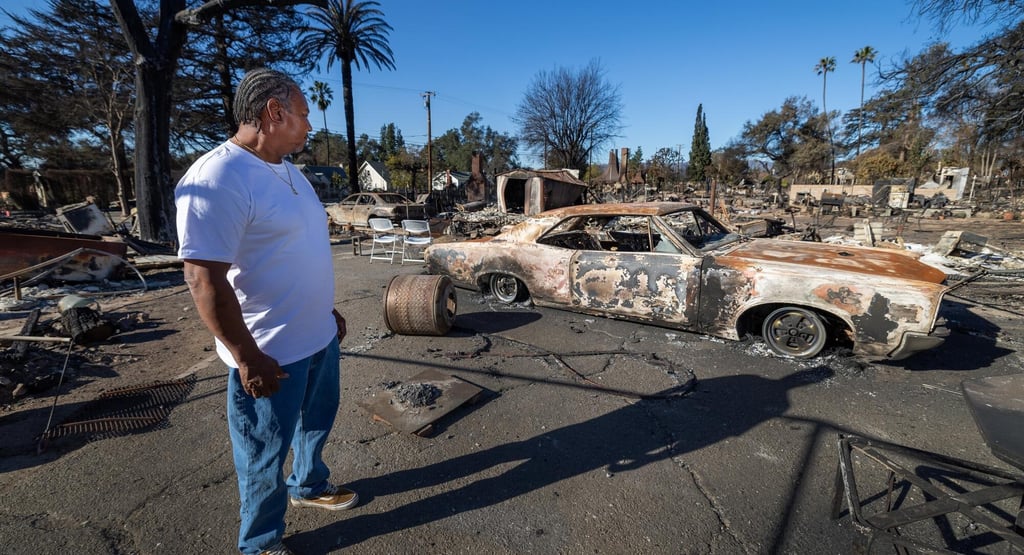
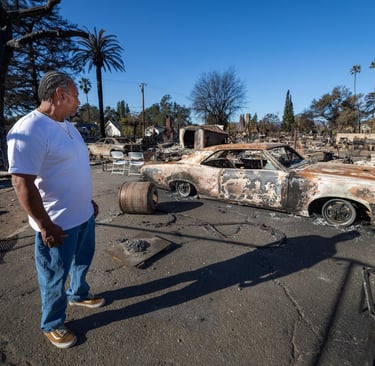
When Fast Fire Network (FFN) teams drove through the destruction left by the Palisades Fire, one heartbreaking scene repeated itself block after block: front doors wide open, household goods strewn across front lawns, and cars still parked in driveways—many burned to the frame. These weren’t scenes of looting or chaos, they were the signatures of families caught unprepared, frantically trying to grab what mattered most in the final, terrifying minutes before they had no choice but to run. Many never made it out safely. Burned-out vehicles told the rest of the story—families who waited just a little too long, only to find roads choked with smoke, embers, and gridlock.
The same pattern played out during the Woolsey Fire, when thousands of people were displaced and forced to sleep in their cars overnight as the fire flanked all exit points out of the Westlake Village area. As we detailed in our earlier story, “The Most Dangerous Moment in a Wildfire Is When You Finally Decide to Leave,” the data is clear: the highest risk isn’t hiding inside your home waiting for the fire—it’s on the road once you finally decide it’s time to go. Late evacuations turn neighborhoods into death traps. Visibility drops. Roads clog. Abandoned cars block escape routes. Electric vehicles left behind can even reignite days later. The lesson is brutally simple: the time to prepare is now, before the smoke appears on the horizon.
That’s why Fast Fire Network created our very own, Pre-Deployment Plan—a practical, no-nonsense framework designed specifically for fast-moving wildfires. It’s built around one core idea: Prep and Go. Prepare your go-bag, your home, your family, and your vehicle in advance, so when the moment comes, you can leave early, calmly, and safely. No last-minute panic. No abandoned belongings on the lawn. No burned cars in the driveway.
Here’s everything you need to consider—straight from the FFN Pre-Deployment Plan.
1. Build Your Go-Bag (and Make It “Grab-and-Go” Ready)
Your go-bag should be a sturdy backpack or wheeled duffel stored in an easy-to-reach spot (closet by the front door or garage). Pack for at least 72 hours per person. Keep it light enough for anyone in the household to carry.
Essential items to include:
- Water & Food: 3 gallons of water per person + 3-day supply of non-perishable food (energy bars, canned goods, jerky). Include a manual can opener.
- Medications & Health: Prescription meds (at least 7-day supply + copies of prescriptions), first-aid kit, N95 masks or respirators for smoke, hand sanitizer, wet wipes, and any medical devices (glasses, contacts, hearing aids, CPAP if portable).
- Clothing & Protection: Change of clothes (long-sleeved cotton shirt, long pants, sturdy closed-toe shoes/boots), leather work gloves, goggles, hat, and bandana or cotton face covering. Wool or cotton is best—synthetics can melt.
- Documents & Cash: Copies of IDs, passports, birth certificates, insurance policies, property deeds, medical records, and pet records. USB drive with digital copies. Cash (small bills), credit cards, and extra set of car keys.
- Communication & Navigation: Fully charged phone + portable charger/power bank, flashlight with extra batteries, local map marked with at least two evacuation routes.
- Sanitation & Misc.: Toilet paper, trash bags, plastic sheeting, duct tape, multi-tool, whistle, emergency blanket/poncho.
- Special Considerations: Pet food/water/carrier/leash/meds (one bag per pet), infant formula/diapers, comfort items for kids/elderly.
Rotate perishables every 6 months and store the bag where you can grab it in under 60 seconds.
2. Other Critical Pre-Deployment Work (Do This Before Fire Season)
A go-bag alone isn’t enough. The full Pre-Deployment Plan includes these steps to make “Go” as safe and fast as possible:
- Create a Family Wildfire Action Plan: Designate meeting points inside and outside the neighborhood. Choose an out-of-area contact person. Practice the plan twice a year. Include pets and vulnerable family members (elderly, disabled, children).
- Know Your Evacuation Routes: Map at least two ways out—avoid relying on a single road. Practice driving them. Know where shelters and animal boarding are located.
- Harden Your Home & Create Defensible Space: Clear dry vegetation within 5 feet of the house (Zone 0), maintain 30 feet of lean/clean/defensible space (Zone 1), and thin fuels out to 100 feet (Zone 2). Use fire-resistant roofing, vents, and siding where possible. Keep gutters clean and remove combustible items from decks and porches.
- Vehicle Preparedness: Keep your gas tank at least half full during fire season. Park facing outward. Store a small emergency kit in the trunk (extra water, blanket, shovel, tire repair). Remove any external flammables (bike racks, cargo boxes).
- Stay Informed: Download your county’s emergency alert app, sign up for reverse-911, and follow local fire department social channels. Get a battery-powered radio for when cell service fails.
- Watch Duty is the gold-standard wildfire mapping and alert app — powered by active and retired firefighters, dispatchers, and first responders who monitor scanners 24/7, they know exactly when a fire starts near your home or community. Download on iPhone or Android.
- Pet & Livestock Plan: Know which shelters accept animals. Have carriers and leads ready. For larger animals, pre-arrange transport or boarding.
- Digital Backup: Scan and store important documents in the cloud (encrypted) so you can access them from anywhere.
Why This Works: Real-World Proof from the Palisades and Woolsey Fires
In the Palisades Fire, the homes with scattered belongings on lawns weren’t the exception—they were the rule for families who hadn’t pre-deployed. They tried to gather things at the last second and were forced to abandon them. Cars left in driveways burned because owners waited for official orders or visible flames. Those who had go-bags and plans were already gone—safe, with their most important items, and not contributing to the deadly traffic jams that trapped others.
The Woolsey Fire showed the same deadly consequences on an even larger scale. Preparation prevents these nightmare scenarios.
The science backs it up: late evacuations are statistically the most dangerous phase. Prep and Go flips the script. You leave before the panic sets in.
Final Word
Wildfires don’t wait for perfect timing. Fast-moving fires—exactly the kind FFN studies—can turn a calm afternoon into an evacuation order in minutes. The families who survived with their lives, their loved ones, and their most precious belongings intact were the ones who treated preparation as a year-round habit, not a last-minute scramble.
Prep your bag. Prep your plan. Prep your home.
If you have accomplished your Prep and go plan then consider yourself:
Your future self (and everyone sharing the road with you) will thank you.
Supporting Resources (New & Updated Guides)
- Ready for Wildfire – Official Go Bag Checklist: Comprehensive, CalFire-endorsed list tailored for California and Western states. [readyforwildfire.org/prepare-for-wildfire/emergency-supply-kit](https://www.readyforwildfire.org/prepare-for-wildfire/emergency-supply-kit/)
- CAL FIRE Wildfire Preparedness Resources: Go-bag templates, evacuation planning tools, and defensible space guides. Includes printable checklists.
- Oregon Wildfire Evacuation Checklist (PDF): Excellent “if you have time” packing list and safety tips applicable anywhere. [wildfire.oregon.gov](https://wildfire.oregon.gov)
- Fire Safe Marin – Go-Kit Guide: Detailed clothing/protection focus (N95s, goggles, cotton layers) for ember-heavy fires.
- Ready, Set, Go! Program (National Fire Protection Association): Community-based wildfire action planning tools.
- FFN’s “The Most Dangerous Moment” Full Story and VIDEO: Data on late-evacuation risks, including Palisades and Lahaina lessons. [fastfirenetwork.com](https://fastfirenetwork.com/the-most-dangerous-moment-in-a-wildfire-is-when-you-finally-decide-to-leave)
Become FAST FIRE READY!