
The Most Dangerous Moment in a Wildfire Is When You Finally Decide to Leave
Late evacuations turn roads into death traps. We saw it firsthand driving through abandoned cars after the Palisades Fire
New Research Proves It: The Most Dangerous Moment in a Wildfire Is When You Finally Decide to Leave
Late evacuations turn roads into death traps. We saw it firsthand driving through abandoned cars after the Palisades Fire — and the deadly 2023 Lahaina fire showed the same nightmare on an even larger scale.
By Jon Gustafson, FastFireNetwork.com
March 28, 2026
A major new study confirms what firefighters and wildfire survivors have suspected for years: once you’re on the road during a wildfire evacuation, it may already be too late.
Published in the International Journal of Disaster Risk Reduction, researchers analyzed 116 real dashcam videos of people fleeing bushfires, plus traffic data from California’s 2019 Kincade and 2020 Glass Fires. The conclusion is chilling but clear: the highest risk isn’t sitting at home waiting for the flames. It’s getting caught in traffic, smoke, and chaos after you finally decide to leave.
People wait until they see flames or neighbors packing up. Then they jump in the car — often too late. Visibility drops, roads clog, embers fly, and panic sets in. The result? Abandoned vehicles, blocked escape routes, and far too many deaths occurring on the road, not in homes.
We Drove Straight Through the Evidence in Pacific Palisades
At FastFireNetwork, we’ve covered dozens of major wildfires, but nothing quite prepared us for what we encountered in the immediate aftermath of the Palisades Fire.
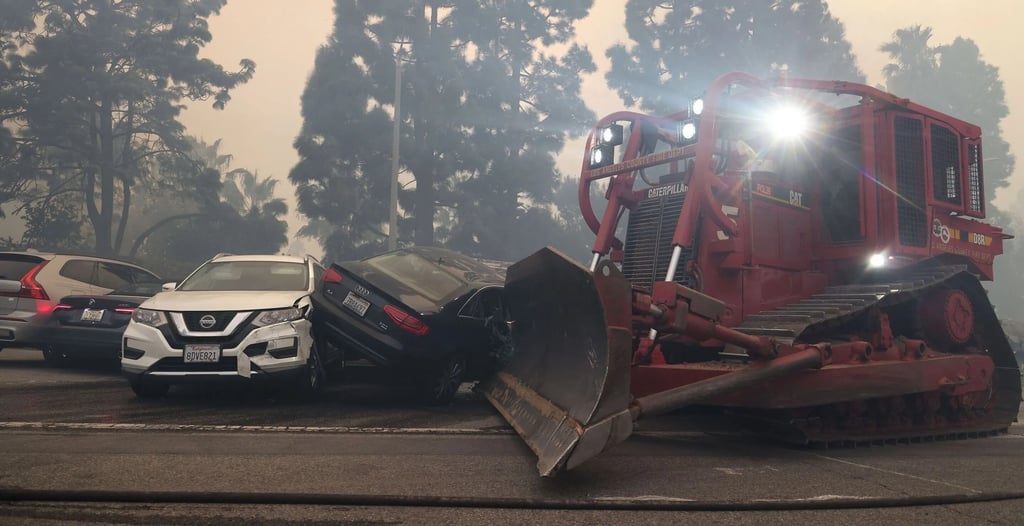
Entire stretches of roadway were littered with cars people had simply ditched when the fire overtook them. Some drivers fled on foot after firefighters ordered them out. Others ran out of time and abandoned their vehicles mid-evacuation. The scene was a stark, real-world illustration of exactly what the new research warns about: delay, and your escape route becomes a graveyard of stalled cars.
These weren’t isolated incidents. Bulldozers had to be brought in just to clear lanes for first responders. Every abandoned car represented a family that waited “just a little longer” — and a road that became impassable for everyone behind them.
The Same Deadly Pattern in Lahaina, Maui (2023)
Tragically, this scenario played out on a horrifying scale during the 2023 Lahaina wildfire in Maui.
As flames raced toward the ocean, police roadblocks and utility vehicles directing traffic funneled thousands of residents onto Front Street and other narrow roads, creating a massive gridlock. With escape routes blocked or closed, many drivers found themselves trapped in bumper-to-bumper traffic as the firestorm closed in.
Survivors described abandoning their cars and walking — or running — away from the flames. Some headed toward the water, jumping into the ocean to escape the intense heat while cars around them burned. Viral videos captured the chaos: long lines of vehicles sitting motionless on Front Street as people left them behind and fled on foot. In some neighborhoods, groups of neighbors ditched their cars on blocked roads and sought shelter in nearby buildings, only to be overtaken by the fire just blocks from home.
The result was devastating. At least 102 people died in the Lahaina fire — many of them trapped in or near their vehicles on those congested roads. The tragedy underscored how late evacuations, combined with obstructed routes, can turn a potential escape into a fatal bottleneck.
A New and Growing Danger: Electric Vehicles
Making the situation even more hazardous is the skyrocketing number of electric vehicles on the roads in fire-prone areas like Pacific Palisades.
In the cleanup following the Palisades and Eaton Fires, crews had to remove lithium-ion batteries from 645 electric vehicles as hazardous waste — the largest lithium-ion battery recovery operation in history. Pacific Palisades alone saw more than 700 newly registered zero-emission vehicles in 2024.
Here’s why that matters to every citizen trying to evacuate:
- Damaged EV batteries can reignite spontaneously days or even weeks after the wildfire is declared out.
- They can explode or release toxic, corrosive gases.
- Firefighters and cleanup crews describe them as “unprecedented” hazards that complicate everything from road clearing to long-term recovery.
When people evacuate late and abandon their EVs in the middle of a fire zone, those vehicles don’t just block traffic — they become ticking time bombs that endanger everyone still trying to get out, plus the responders coming in to help.
The Clear Message for Every Resident in Fire Country
The research, the videos from Palisades, the heartbreaking accounts from Lahaina, and our own eyes on the ground all tell the same story:
Go early. Don’t wait for the sky to turn orange.
Have your go-bag ready. Know at least two evacuation routes. Monitor official alerts and fire weather obsessively. And if officials say “evacuate,” treat it like the life-saving order it is — because every minute you wait dramatically increases the odds that you’ll end up in one of those abandoned cars we drove past.
Late departures don’t just risk your life. They risk everyone else’s — and can turn roads into deadly traps when barriers, traffic, or poor planning close off options.
Stay safe out there. We’ll keep reporting from the front lines so you don’t have to learn these lessons the hard way.
FastFireNetwork.com — Real-time wildfire intelligence.
Direct link to the journal paper (via ScienceDirect): https://www.sciencedirect.com/science/article/pii/S2212420925007290
