The Hidden Danger of Embers
Wind-Driven Wildfires: The Hidden Danger of Embers and Why Your Yard (and Your Neighbor’s) Matters More Than You Think
Wind-Driven Wildfires: The Hidden Danger of Embers and Why Your Yard (and Your Neighbor’s) Matters More Than You Think
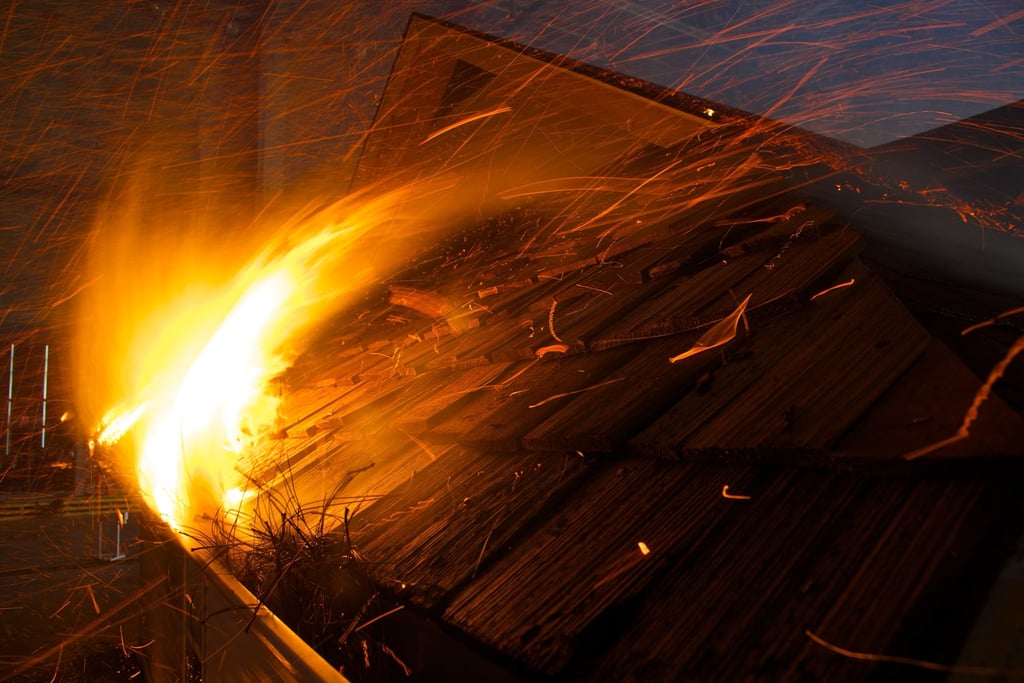
Wildfires driven by strong winds are becoming more frequent and destructive, especially in the wildland-urban interface (WUI) where homes meet nature. You’ve probably seen the dramatic footage of flames racing toward neighborhoods—but the real culprit behind most structure losses isn’t the roaring fire front. It’s the invisible storm of embers (also called firebrands) that wind can carry miles ahead, raining down like fiery confetti and igniting homes long before the main blaze arrives.
If you’re wondering exactly where these fires most often start on a house—roof, vents, deck, or siding—the honest answer is that comprehensive national statistics with clean percentage breakdowns simply don’t exist. Post-fire investigations are complicated by total destruction, overlapping causes, and the chaos of large events. But years of research from NIST, IBHS, and CAL FIRE tell a clear story: embers are responsible for the vast majority of home ignitions in wind-driven wildfires.
Embers: The 1 Threat (60–90% of Ignitions)
Studies consistently show that wind-blown embers account for up to 90% of building ignitions during WUI fires. In the 2007 Witch Creek Fire in San Diego County, roughly two out of every three destroyed homes (about 67%) were linked to ember ignitions. The 2012 Waldo Canyon Fire in Colorado Springs followed a similar pattern, with embers and firebrands playing a major role in roughly 54% of structure losses, often compounded by spot fires from nearby burning homes.
These tiny, glowing particles can travel far ahead of the flames, land on your property, and smolder for hours before flaring up. They don’t need direct flame contact—they just need a place to settle and a little fuel.
Where Embers Most Often Ignite Structures
While we don’t have exact “X% starts here” data, post-fire analyses repeatedly point to the same vulnerable spots:
- Roofs, gutters, and eaves: Horizontal surfaces where embers and debris pile up easily.
- Vents (attic, eave, foundation, gable): Uns screened or poorly protected vents act like open doors for embers to enter attics or crawl spaces.
- Decks, porches, and attachments: Embers accumulate on top, underneath, or in gaps, turning your outdoor living space into a fire starter.
- Base of walls, siding, and nearby combustibles: Mulch, fences, woodpiles, or vegetation right next to the house can ignite first and spread flames to the structure.
In short, homes often “burn from the top down” or from the inside out once embers find their way in.
Watch this video from the
Clean Up and Maintain Your Property—It’s Your First Line of Defense
The good news? You have more control than you think. The single most effective thing you can do is create and maintain a Home Ignition Zone (also called defensible space). This isn’t a one-time weekend project—it’s ongoing vigilance.
Focus especially on Zone 0 (the critical 0–5 feet immediately around your home):
- Remove all combustible materials: no bark mulch, no woodpiles, no flammable patio furniture, no dry leaves or pine needles.
- Keep gutters and roofs clear of debris year-round.
- Trim tree branches so they don’t overhang the roof or touch the house.
- Use non-combustible or ignition-resistant materials for decks, siding, and fencing where possible.
In the 5–30 foot “lean, clean, and green” zone, keep vegetation spaced out, pruned, and well-maintained. Beyond that (30–100+ feet), thin trees and shrubs to slow fire spread and reduce ember production.
Regular maintenance isn’t optional in fire-prone areas—it’s what turns a vulnerable home into a survivor. Research shows that well-maintained properties dramatically reduce ignition risk even during intense ember attacks.
Be a Good Neighbor—Wind Doesn’t Stop at the Property Line
Here’s something many homeowners overlook: your neighbor’s house could become the biggest threat to yours—and vice versa.
In wind-driven fires, once a few homes ignite (often from embers), they become new sources of firebrands. Those burning structures can shower embers onto nearby properties, leading to rapid structure-to-structure spread. In the Waldo Canyon Fire, for example, the majority of destroyed homes were ultimately ignited by flames and embers from already-burning neighboring residences rather than the original wildland fire front.
Strong winds don’t respect fences or lot lines. A cluttered yard next door with dry vegetation, wooden fences, or debris can generate embers that land on your roof. Conversely, keeping your own property clean helps protect the entire neighborhood. Talk to your neighbors, share resources, and work together on community-wide defensible space. Collective action saves homes.
Take Action Today—Before the Next Wind Event
Wildfire season isn’t coming—it’s here, and it’s getting longer. The data is clear: embers are the dominant danger, and the homes that survive are the ones whose owners took proactive steps to harden their properties and maintain their surroundings.
Start with a quick walk-around this weekend:
- Clear Zone 0 completely.
- Screen or upgrade all vents.
- Clean gutters.
- Chat with your neighbors about doing the same.
Your efforts won’t just protect your home—they could save your entire community when the next wind-driven fire arrives.
Sources
- Insurance Institute for Business & Home Safety (IBHS). Ignition Potential of Decks Subjected to an Ember Exposure. (Multiple references to ember statistics and Witch Creek Fire data.)
- NIST Technical Reports on Waldo Canyon Fire and WUI structure ignitions (2015).
- Quarles et al. (2023). “Factors influencing ember accumulation near a building.” International Journal of Wildland Fire.
- Maranghides et al. NIST case studies on Witch Creek/Guejito Fires (2009).
- NFPA and IBHS resources on Home Ignition Zones and defensible space.
- Additional supporting data from NIST WUI Fire Group and post-fire analyses (2017–2025 reports).
