Long-Term Fire Retardants for Wildfire Protection: What Southern California Homeowners Need to Know
Companies all over Southern California are now offering long-term fire retardant (LTR) application services to homeowners, HOAs, and communities looking to add an extra layer of protection against wildfires.
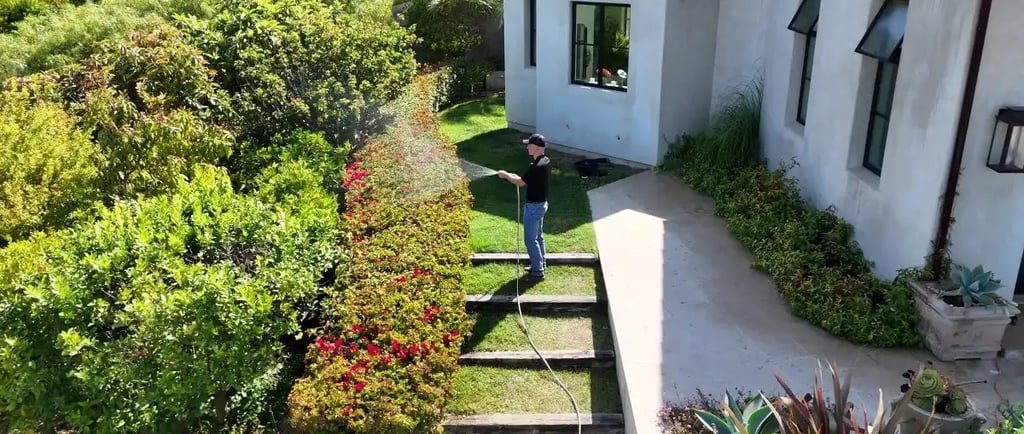
Companies all over Southern California are now offering long-term fire retardant (LTR) application services to homeowners, HOAs, and communities looking to add an extra layer of protection against wildfires. From private firms using eco-focused formulas like Clore to established solutions based on proven products like PHOS-CHEK, these services promise to make vegetation and structures less flammable ahead of fire season. But do they deliver?
What Are Long-Term Fire Retardants and How Do They Work?
Long-term fire retardants are chemical mixtures (mostly fertilizer-based salts mixed with water) applied to vegetation, fuels, fences, or even structures. Unlike short-term suppressants or gels that wash away quickly, LTRs claim to remain effective for weeks or months after the water evaporates—until heavy rain (typically 0.5 inches or more) washes them away.
The Science in Simple Terms:
- The water initially cools and wets the fuels.
- As it dries, salts (usually ammonium phosphates) coat the material. When fire heat hits, they promote charring (turning plant material into a protective carbon layer) and release gases that dilute oxygen and interrupt the fire’s chemical reaction.
- Thickeners help it stick, resisting wind and light rain.
Alternatives like magnesium chloride-based products work by drawing moisture from the air for potentially longer-lasting effects.
Testing and Proven Effectiveness
The U.S. Forest Service (USFS) rigorously tests products through its Wildland Fire Chemical Systems program before adding them to the Qualified Products List (QPL). Testing covers fire performance (reducing flame length, rate of spread, and intensity), corrosion, toxicity, and environmental impact—often taking 18-24 months.
Phosphate-based retardants like Perimeter Solutions’ PHOS-CHEK series consistently perform well in lab and field tests. Proactive roadside applications have dramatically reduced ignitions in high-risk California areas.
Important Distinction: LTRs vs. Fire-Retardant Coatings
Note that chemical LTRs applied to vegetation differ significantly from fire-retardant coatings or paints sold for home exteriors. According to a key study by the Insurance Institute for Business & Home Safety (IBHS), most exterior coatings lose effectiveness within months due to weathering from sun, rain, temperature changes, and most important the daily onshore moisture of our Mediterranean climate. By the three-month mark, none provided meaningful protection compared to untreated wood. These are not a reliable long-term solution and are not code-compliant as a primary defense in California.
Evidence from Recent Fires
Ground-applied LTRs, such as Clore, have been credited with helping protect homes during the Palisades and Eaton fires. Aerial drops of PHOS-CHEK have slowed fire spread, giving firefighters critical time. While no single tool guarantees survival in extreme Santa Ana wind-driven fires, layered use (retardants + defensible space + hardening) correlates with better outcomes.
Companies Offering Services in Southern California
Several providers serve the region:
- SoCal Wildfire Defense Systems and Blaze Busters use Clore (non-toxic, Cal Fire-approved, long-lasting).
- Applicators offering PHOS-CHEK uncolored ground versions.
- Other firms like Matador Fire and Allied Disaster Defense provide systems and applications.
Costs typically range from $500–$7,000+ per property, with some insurance discounts possible. Always verify QPL approval and combine with proven measures.
The Important Downsides and Limitations
While helpful, LTRs are not a silver bullet. Here are the key negatives:
Environmental and Health Concerns:
- Heavy Metals: A 2024 USC study found toxic metals (chromium, cadmium, vanadium, arsenic, lead, etc.) in PHOS-CHEK and similar products at levels far exceeding drinking water limits—sometimes thousands of times higher. Researchers estimate hundreds of thousands of pounds of these metals released in the Western U.S. over a decade.
- Aquatic Life: Phosphate runoff can trigger algal blooms that deplete oxygen in waterways, harming fish, amphibians, and ecosystems. Concentrated spills are particularly toxic.
- Wildlife and Soil: Potential localized impacts on insects, small mammals, and plants; acts as a fertilizer that may alter vegetation communities.
Corrosion and Practical Issues:
- Can corrode aircraft, equipment, and infrastructure despite inhibitors. Fortress (magnesium chloride) faced significant aircraft corrosion issues, limiting its use.
- Weather-dependent in Southern California’s Mediterranean Climate: LTRs need reapplication after rain, but our region’s frequent onshore marine moisture, fog, and humidity can compromise their longevity and performance even without heavy rainfall. They are also far less effective during extreme Santa Ana wind-driven events.
- Costly and labor-intensive for large-scale or repeated use.
- Cleanup can be messy.
Human Health: Low acute risk with proper handling, but chronic exposure to heavy metals is a concern for workers or post-application areas.
Agencies manage risks with guidelines (e.g., avoiding waterways), but these trade-offs highlight why LTRs should be one tool among many.
Hedges and the "Dead Zone" Challenge
When it comes to fighting fire, the hedge "DeadZone" is of upmost concern while fighting fire. A large dead zone allows the fire to quickly become extremely hot, preheating the fuels around it.
No strong, specific public data exists on long-term fire retardants applied directly to hedges and their interior "dead zone."
Scaling to Large Communities: A Realistic Scenario for 1,000+ Homes
For HOAs or large neighborhoods with 1,000+ homes, LTRs can be a supplemental tool—but they come with amplified challenges...
Does Community Investment Make a Difference?
Data shows that proactive treatments, such as roadside applications of long-term retardant, can significantly reduce ignitions in certain situations. For example, treated highway corridors in California have seen drops in fire starts. When combined with structural hardening, defensible space, and active suppression systems, these strategies can improve home survival rates and insurability.
However, results depend heavily on proper implementation and are strongest as part of a well-executed layered approach. In extreme Santa Ana wind-driven fires — the most dangerous and common high-impact events in Southern California — even treated areas often provide little resistance. The powerful winds and long-distance ember cast can easily push through vegetation treated with LTRs, making them a relatively small speed bump rather than a reliable barrier.
This is why Fast Fire Network emphasizes realistic expectations: LTRs can be a helpful supplemental tool in lower-intensity scenarios or targeted community perimeters, but they should never be considered a primary defense for your home.
San Diego Fire Department / San Diego County Fire Stance on Long-Term Fire Retardants (LTRs)
Positive and Proactive Support — San Diego County Fire (which works closely with CAL FIRE in the region) is one of the most active users of ground-applied long-term fire retardants in California.
Key Facts:
- Multi-Year Program: As of 2025, San Diego County Fire is in its fifth year of applying PHOS-CHEK long-term fire retardant along high fire-risk roadways and evacuation corridors.
- They treat vulnerable areas, including underserved communities, to reduce ignitions from roads (a major source of wildfire starts).
- CAL FIRE crews in San Diego have also applied it in locations like Wildcat Canyon Road for multiple seasons.
- The program is viewed as a successful proactive prevention tool that slows fire spread and gives firefighters more time to respond.
Overall Official Stance:
- San Diego County Fire and CAL FIRE endorse and actively deploy ground-applied LTRs (especially PHOS-CHEK) as part of their wildfire prevention strategy.
- They use it primarily on public lands, roadsides, and high-risk corridors rather than widespread residential properties.
- Aerial retardant drops are also standard during active incidents.
LA County Fire uses and supports long-term fire retardants, primarily in aerial applications during active wildfires, but they do not appear to have a high-profile, proactive ground-applied program for roadsides or residential properties like San Diego County Fire does.
LA County Fire’s public communications (Ready! Set! Go! program, Fire Hazard Reduction pages) prioritize non-chemical layered mitigation — defensible space, ember-resistant home features, and early preparation — over relying on chemical retardants for property protection.
Important Nuance for Homeowners:
While agencies support LTRs for strategic, large-scale applications, they do not position them as a primary home protection solution. Official emphasis from San Diego County and CAL FIRE remains on:
- Defensible space (Zones 0-2)
- Home hardening
- Vegetation management
Considering the large volume of questions we have received regarding LTRs, the following is the Fast Fire Network Statement on Long-Term Fire Retardants:
At Fast Fire Network, we believe in transparent, experience-based education for Southern California homeowners facing wind driven Santa ana wildfire risk.
Under normal circumstances, properly applied long-term fire retardants can have a limited role as one supplemental tool in a comprehensive wildfire defense plan — particularly for treating vegetation in lower-intensity fire scenarios or along roadsides and community perimeters. However, when facing the Super Bowl of all wind-driven fire events — the powerful Santa Ana winds common to our region — LTRs become little more than a small speed bump.
Wildland firefighters who regularly work with foaming agents and suppression systems understand these real-world limitations. Our deep concern is that many residents and HOAs are being sold these products with the expectation that their homes will be significantly protected. In extreme ember-driven, high-wind conditions, chemical retardants on vegetation simply cannot overcome the overwhelming fire behavior we see in major Southern California wildfires.
True home survival depends on proven, layered strategies: defensible space (Zones 0-2), home hardening, and active exterior fire suppression systems.
If you’re considering long-term fire retardants for your property, we strongly encourage you to reach out to Fast Fire Network first. We’ll provide an honest, site-specific assessment and help you build a realistic, engineered wildfire protection plan that will make you more resilient against Santa Ana wind driven events.
Contact Fast Fire Network
fastfirenetwork.com | Jon Gustafson | 424-388-0493
Final Recommendations
In certain situations, long-term fire retardants can be a noteworthy addition when applied by professionals using QPL-approved products. They’re especially useful for vegetation around homes but come with real environmental costs that shouldn’t be ignored. Prioritize proven fundamentals: defensible space (Zones 0-2), home hardening (ember-resistant features, Class A roofs), and reliable active suppression like exterior sprinkler systems.
Work with experienced providers, review SDS sheets (See Below), and integrate retardants thoughtfully. Early preparation saves homes and lives.
This article is for educational purposes. Consult local fire officials, certified applicators, and experts for site-specific advice.
Resources and Further Reading
- USFS Wildland Fire Chemical Systems Qualified Products List: https://www.fs.usda.gov/rm/fire/wfcs/qualified_products_long_term.php
- Perimeter Solutions (PHOS-CHEK):
https://www.perimeter-solutions.com/fire-safety-fire-retardants/
- IBHS Fire-Retardant Coatings Study:
https://ibhs.org/wildfire/fire-retardant-coatings-used-in-exterior-applications/
- USC Study on Toxic Metals in Retardants:
https://viterbischool.usc.edu/news/2024/10/toxic-metals-found-in-wildfire-suppressants/
San Diego County Marks Fifth Year Using PHOS-CHEK Ground-Applied Fire Retardant
- Clore Wildfire Retardant: https://www.clorefr.com/
- SoCal Wildfire Defense Systems: https://socalwildfiredefensesystems.com/
SDS Sheets (Safety Data Sheets) are standardized documents that provide detailed safety and handling information for chemical products.
An SDS is like the “owner’s manual” for hazardous chemicals. It tells you everything you need to know about safely using, storing, transporting, and disposing of a product — and what to do in case of an emergency.
For products like PHOS-CHEK, CloreFR, or Fortress, the SDS sheet will show:
Exact chemical ingredients (including ammonium phosphates, heavy metals, etc.)
Health and environmental hazards
Corrosion risks
Required protective equipment for applicators
Cleanup and disposal instructions
Aquatic toxicity and runoff warnings
Key Sections in an SDS (there are 16 total):
Identification
Hazard identification
Composition/ingredients
First aid measures
Fire-fighting measures
Accidental release (spills)
Handling & storage
Exposure controls / PPE 9–16. Physical properties, stability, toxicology, ecology, disposal, etc.