Expanding on the Stay and Defend Model
Expanding the Stay and Defend Model: A Deep Dive into Wildfire Resilience Strategies
NOTE: FASTFIRENETWORK.COM received a number of questions about our stay-and-defend article (Link Below) written a few months ago. Please take a moment to read that article first. We at FASTFIRENETWORK.COM will always recommend safety leaving a danger zone well ahead of a Fire, for those who want to stay, read on...
https://fastfirenetwork.com/stay-and-defend-your-home
Expanding the Stay and Defend Model: A Deep Dive into Wildfire Resilience Strategies
In a recent article from FastFireNetwork.com, Los Angeles County Fire Chief Anthony Marrone highlighted a significant shift in wildfire response tactics: moving away from the rigid "leave early" mandate toward a "stay and defend" approach for prepared residents. This model, which empowers homeowners with proper training, equipment, and home hardening to protect their properties during wildfires, is gaining traction amid intensifying fire seasons driven by climate change. But what does "stay and defend" truly entail? Drawing from global experiences, particularly Australia's long-standing policies, this blog post expands on the concept, exploring its history, mechanics, benefits, risks, preparation guidelines, real-world examples, and potential for broader adoption in high-risk areas like Southern California. We'll delve into studies, statistics, and expert insights to provide a comprehensive resource for homeowners, policymakers, and communities facing wildfire threats.
The Origins and Evolution of the Stay and Defend Model
The "stay and defend" strategy, often formalized as "Prepare, Stay and Defend or Leave Early" (PSDLE or SDLE), originated in Australia following devastating bushfires in the 1980s. The pivotal event was the 1983 Ash Wednesday fires, which claimed 75 lives and destroyed numerous homes across Victoria and South Australia. Analysis revealed that most fatalities occurred not inside structures but during frantic, last-minute evacuations—people caught in vehicles or outdoors fleeing flames and smoke. This led to a paradigm shift: instead of mandatory mass evacuations, which can cause chaos and gridlock, the policy encouraged residents to prepare their homes in advance and make informed choices to either defend them actively or evacuate well before the fire arrives.
Over the decades, the model was refined, especially after the 2009 Black Saturday fires, Australia's deadliest, which killed 173 people in a single day. A Royal Commission investigation prompted updates, including a new "catastrophic" fire danger rating where defense is deemed impossible, mandating evacuations for all. Despite these tragedies, a 60-year review of Australian fire data affirmed the policy's soundness, showing that prepared homes and residents could survive even intense fire fronts. The core mantra became "houses protect people, and people protect houses," emphasizing that structures provide shelter from radiant heat, while active human intervention extinguishes embers—the primary cause of home ignitions.
In the U.S., discussions about adopting similar strategies intensified after events like the 2003 Cedar Fire in Southern California, where 22 civilians died, nearly all during late evacuations. Researchers noted parallels: over 78% of Australian civilian wildfire deaths in the past century happened while fleeing or outside structures, mirroring U.S. patterns. This has led to pilot programs in places like Montana and California, signaling a potential evolution from the traditional "evacuate immediately" doctrine.
How the Stay and Defend Model Works: Core Principles and Decision-Making
At its heart, the stay and defend model is about empowerment through preparation, not recklessness. Residents must assess their property's defensibility, their physical and mental capabilities, and the fire's severity before deciding. The process involves three phases:
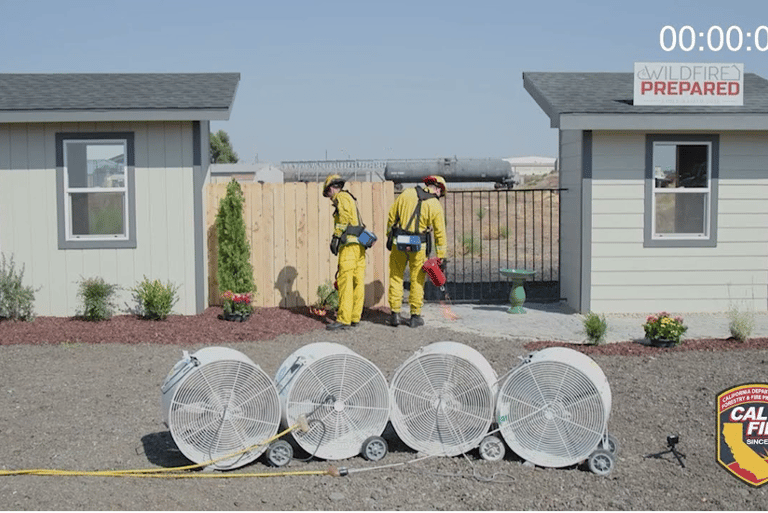
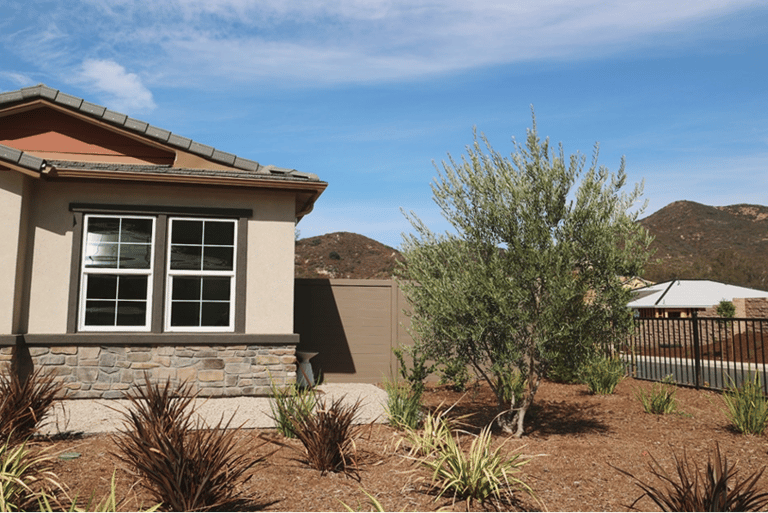
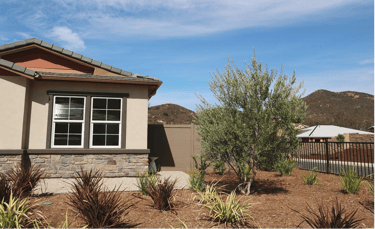
1. Preparation: Months or years in advance, homeowners "harden" their structures against embers and flames. This includes using fire-resistant materials for roofs, siding, and decks; sealing vents and eaves; and creating defensible space—cleared zones around the home to reduce fuel loads.
2. Decision Point: On high-risk days, residents choose to "leave early" (well before threats materialize) or "stay and defend." Late evacuation is discouraged due to risks like smoke-reduced visibility and traffic jams.
3. Active Defense: If staying, residents monitor the fire, extinguish spot fires from embers, and retreat indoors during the main fire front's passage (typically 5-10 minutes of intense heat). Post-front, they patrol for re-ignitions.
This active approach contrasts with passive "shelter-in-place," where people simply hunker down without intervention—research shows passive sheltering can lead to hazards like carbon monoxide buildup. In Australia, annual training sessions by fire agencies cover these tactics, fostering a culture of shared responsibility.
The Pros: Why Stay and Defend Can Save Lives and Homes
Proponents argue that stay and defend reduces the dangers of mass evacuations, which have caused numerous fatalities. For instance, in Australia, only about 2% of civilian deaths occurred while actively defending prepared homes, compared to 78% during evacuations or outdoor activities. Studies like those from the U.S. Forest Service and CSIRO confirm that embers, not direct flames, destroy most homes—active patrolling can prevent this.
Benefits include:
- Empowerment and Resilience: It engages homeowners as "part of the solution," building community brigades and reducing reliance on overstretched firefighters. In Australia, this has curtailed panic and property damage.
- Fewer Evacuation Risks: Late evacuations lead to accidents; the model promotes early decisions.
- Property Protection: Prepared homes have higher survival rates; one study found active defense doubled chances of home survival.
- Resource Efficiency: Freed-up firefighters can focus on uncontained fires.
In California, where wildfires like the 2018 Camp Fire highlighted evacuation failures, experts like UC Berkeley's Scott Stephens advocate for this to address growing WUI vulnerabilities.
The Cons and Risks: When Staying Becomes Dangerous
Despite its successes, the model isn't foolproof. Climate change has intensified fires, making defense riskier. During Black Saturday, even prepared residents died due to extreme winds shattering windows and doors. Critics warn of overconfidence: without rigorous preparation, staying can be fatal.
Key risks:
- Inadequate Preparation: Only 20-40% of at-risk residents plan to stay, and many lack the physical fitness or equipment.
- Unpredictable Conditions: Sudden "wall-of-flame" fires leave no time for defense or evacuation.
- Dense Urban Interfaces: House-to-house ignitions in crowded WUIs complicate isolated defenses.
- Liability and Equity Issues: Governments hesitate due to legal risks; not all (e.g., elderly or vacation homeowners) can participate.
Post-2009 reviews in Australia led to stricter guidelines, emphasizing that "there are simply not enough fire trucks for every house."
Preparation and Training: Building a Defensible Home
Preparation is the model's cornerstone. Start with a risk assessment: Is your home in a defensible location? Organizations like Fast Fire Network offer workshops on defensible space and hardening.
Step-by-Step Guide
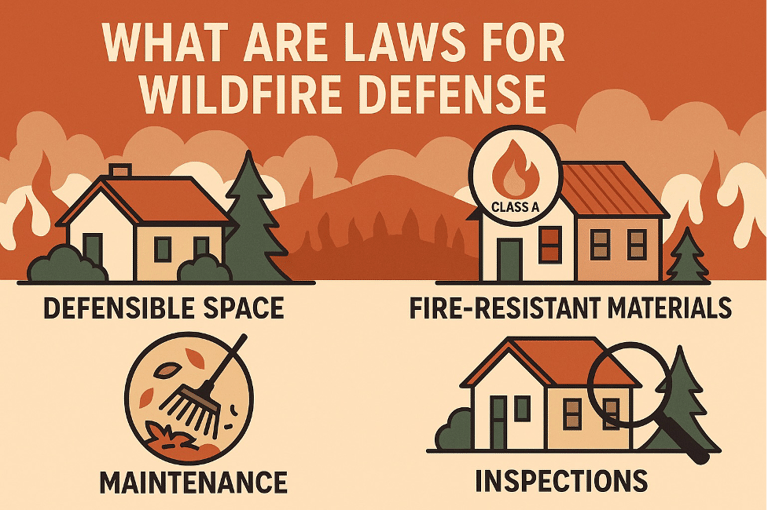
1. Home Hardening: Use Class A fire-resistant roofing, non-combustible siding, and ember-proof vents. Seal gaps under decks and install dual-pane windows.
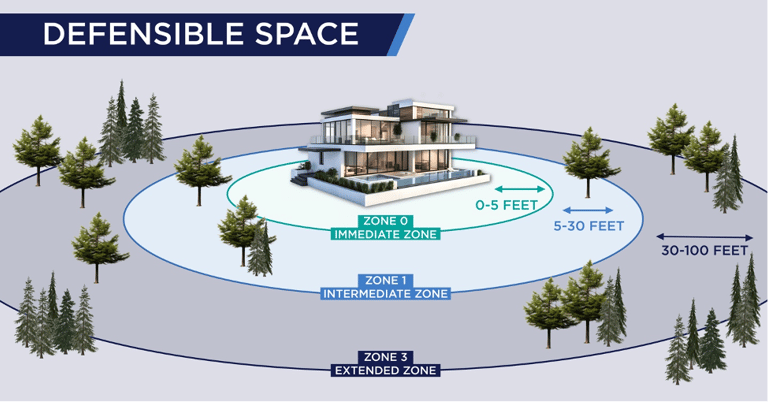
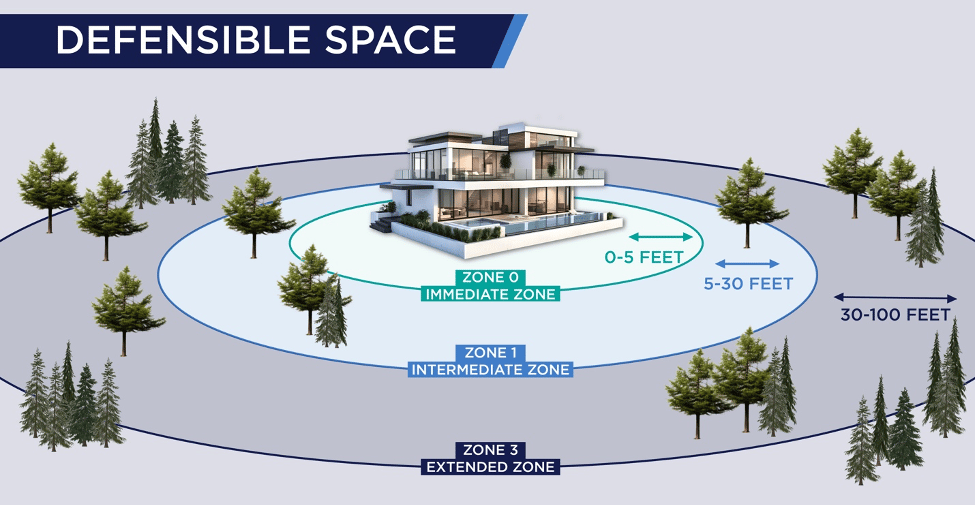
2. Defensible Space Zones:
- Zone 0 (0-5 ft): No combustibles; use gravel or concrete.
- Zone 1 (5-30 ft): Low plants, spaced trees; remove dead vegetation.
- Zone 2 (30-100 ft): Thin fuels, prune trees.
3. Equipment Checklist: Independent water source (e.g., pool or tank with pump), hoses, ladders, fire extinguishers, protective gear (goggles, masks, non-synthetic clothing), radios for updates.
4. Training: Attend sessions on fire behavior, mental preparation for noise and darkness, and crisis response. In Australia, this includes simulations.
5. Community Coordination: Form neighborhood plans for shared resources and evacuation routes.
Regular maintenance and inspections are crucial—California laws mandate defensible space in high-hazard zones.
Real-World Case Studies: Lessons from Fires
Australia: Black Saturday and Beyond
In 2009, despite preparations, 173 died, but many survived by defending homes. A study of shelters during the fires showed active defense worked when homes were fortified, but passive sheltering failed in some cases. Post-event, policies emphasized realistic conditioning: "Even very well prepared people died... conditioning people to the reality is key."
U.S. Examples
- Rancho Santa Fe, California: Adopted "Shelter in Place" in 2004. During the 2007 Witch Creek Fire, no SIP homes were lost, while nearby areas suffered 61 losses. Success attributed to ignition-resistant designs and early warnings.
- Painted Rocks, Montana: Since 2006, voluntary certifications and training prevented losses in fires like the 2000 Razor Fire. Residents provide fire intel, easing professional responses.
These cases show preparation can yield zero fatalities and minimal damage.
Adoption in California: Challenges and Recommendations
California's recent endorsement by Chief Marrone reflects growing interest, but full adoption requires state leadership. Experts recommend site-specific mapping for fire zones, similar to flood maps, to identify defensible areas. Challenges include dense populations and vacation homes, where "prepare and leave early" might prevail. Broader U.S. implementation needs education campaigns like Australia's Fire Ready programs.
Criticisms, Alternatives, and the Path Forward
Critics argue the model undervalues biodiversity and amenity values in fire management, favoring prescribed burns over adaptive governance. Alternatives include enhanced evacuations with better routes and shelters, or stricter building codes without resident defense. Surveys show mixed intent: 33.8% would leave immediately, 11.8% stay and defend, 45.4% wait and see.
In conclusion, the stay and defend model offers a resilient alternative to one-size-fits-all evacuations, but success hinges on preparation and context. As wildfires worsen, integrating Australian lessons with U.S. innovations could save lives and homes. Homeowners: Start assessing today—contact local fire services for training. Policymakers: Foster shared responsibility to build fire-adapted communities.
SOURCES FOR THIS ARTICLE:
Here are the primary sources that informed and supported the content in the blog article on expanding the stay and defend model for wildfire resilience. I've organized them by major sections/topics for clarity, drawing from peer-reviewed studies, official reports, news articles, and expert analyses (primarily 2005–2025). These provide evidence on history, statistics, mechanics, risks, U.S. adoption efforts (including California), case studies, and ongoing debates.
Origins, Evolution, and Australian Policy (Including Black Saturday and Royal Commission)
- 2009 Victorian Bushfires Royal Commission Final Report (Comprehensive review of Black Saturday fires, critiquing and refining the "Prepare, Stay and Defend or Leave Early" policy):
http://royalcommission.vic.gov.au/finaldocuments/summary/PF/VBRC_Summary_PF.pdf
- Experiences of Sheltering During the Black Saturday Bushfires: Implications for Policy and Research (2017 study on PSDLE policy viability post-Black Saturday):
https://www.sciencedirect.com/science/article/abs/pii/S221242091730050X
- Ten Years After the Black Saturday Fires: What Have We Learnt from Post-Fire Research? (2019 overview of policy changes and persistent issues):
- Black Saturday Survivors Who Once Planned to 'Stay and Defend' Admit They Would Never Do So Now (2019 ABC News article on survivor reflections):
Statistics on Civilian Deaths (Evacuation vs. Defending)
- Wildfires and WUI Fire Fatalities (2020 USDA Forest Service analysis, including Australian data: ~78% of deaths during evacuation/fleeing, <2% while actively defending):
https://www.fs.usda.gov/rm/pubs_journals/2020/rmrs_2020_haynes_k001.pdf
- Is the Australian “Stay and Defend or Leave Early” Approach an Option for Wildfire Management in the United States? (2009 USDA study citing 78% of Australian civilian deaths while fleeing over 100 years):
https://research.fs.usda.gov/treesearch/download/19391.pdf
- Australian Bushfire Fatalities 1900–2008: Exploring Trends in Relation to the 'Prepare, Stay and Defend or Leave Early' Policy (Referenced in multiple sources for fatality breakdowns):
(See related Haynes et al. datasets and analyses in the above reports)
U.S. Adoption, California Discussions, and Chief Marrone's Statements
- L.A. County Fire Chief Backs Training for Residents to Stay Behind and Defend Homes from Wildfires (2025 CBS News article on Anthony Marrone's shift toward trained "stay and defend"):
https://www.cbsnews.com/news/citizen-firefighters-wildfire-community-brigade-los-angeles
- Why California Should Consider Australia's "Prepare, Stay and Defend" Wildfire Policy (2009 UC Berkeley release advocating consideration post-Black Saturday):
https://newsarchive.berkeley.edu/news/media/releases/2009/02/26_staydefend.shtml
- Public Response to Wildfire: Is the Australian “Stay and Defend or Leave Early” Approach an Option for Wildfire Management in the United States? (2009 Journal of Forestry article on potential U.S. adoption):
https://research.fs.usda.gov/treesearch/download/19391.pdf
- Resilience Under Fire (2019 Natural Hazards Center report on "stay and defend" attitudes during the 2018 Woolsey Fire in Southern California):
https://hazards.colorado.edu/quick-response-report/resilience-under-fire
Case Studies (e.g., Rancho Santa Fe Shelter-in-Place Success)
- Adoption and Perceptions of Shelter-in-Place in California's Rancho Santa Fe Fire Protection District (2010 USDA study on perceptions and outcomes):
https://www.nrs.fs.usda.gov/pubs/jrnl/2010/nrs_2010_paveglio_001.pdf
- Stay-and-Defend Debate Intensifies (2009 San Diego Union-Tribune article noting no losses in Rancho Santa Fe shelter-in-place communities during 2007 Witch Creek Fire):
https://www.sandiegouniontribune.com/2009/02/22/stay-and-defend-debate-intensifies
- Newer Housing Developments in Rancho Santa Fe Are Fire Shelter-in-Place Communities (2025 10News update referencing 2007 success):
Preparation, Risks, and Broader Debates
- Ready Set Go | Los Angeles Fire Department (Official LAFD page contrasting with "stay and defend" risks):
- Why Some People Stay Behind in a Wildfire (2021 New York Times discussion of U.S. cases and Australian parallels):
https://www.nytimes.com/2021/09/24/podcasts/daily-newsletter-dixie-wildfires-california.html
- The Future of Wildfire Fighting Is on All of Us (2020 Outside Online article on national policy debates):
https://www.outsideonline.com/outdoor-adventure/environment/wildfire-prevention-fighting-stay-defend
These sources blend historical data, fatality analyses, policy critiques, and emerging U.S. shifts (e.g., L.A. County's evolving stance). Many are open-access or have abstracts freely available; full texts may require institutional access for some journals.
Here are all the unique acronyms that appear in the article, listed with their full forms where provided or implied in context (some are used without explicit expansion):
PSDLE — Prepare, Stay and Defend or Leave Early (the fuller, original Australian phrasing of the model)
SDLE — Stay and Defend or Leave Early (a shortened variant of the model name)
WUI — Wildland-Urban Interface (refers to areas where human development meets wildland vegetation, a key context for wildfire risk)
CSIRO — (Used in reference to studies confirming ember threats; this is the Commonwealth Scientific and Industrial Research Organisation, Australia's national science agency, but not expanded in the text)
SIP — Shelter in Place (contrasted with active "stay and defend"; refers to passive hunkering down inside without active intervention)
UC — (Appears in reference to "UC Berkeley's Scott Stephens"; clearly means University of California, but not spelled out)
LAFD — Los Angeles Fire Department (mentioned in passing for context on fire chief statements or regional tactics)
CAL FIRE — (California Department of Forestry and Fire Protection; referenced multiple times regarding guidelines, but not expanded in the article)
Disclaimer: The information provided regarding "stay and defend" strategies is for educational and awareness purposes only and draws from general wildfire preparedness discussions. Fast Fire Network strongly recommends that individuals and communities prioritize personal safety by preparing their properties in advance (through defensible space, home hardening, and emergency planning) and then leaving safely and early when a wildfire threatens. Staying to defend a property can involve significant risks, including life-threatening danger from extreme fire behavior, embers, smoke, heat, and limited escape options. This approach is not suitable for everyone and should never override official evacuation orders or warnings from fire authorities. Always follow local fire department, CAL FIRE, or emergency management guidance, heed evacuation alerts promptly, and evacuate when instructed or if you feel unsafe. Preparation empowers safer choices, but evacuation remains the safest option in most wildfire scenarios. Consult professionals and official resources for personalized advice.