Best Air Filters and Purifiers for your home
Best Air Filters and Purifiers for Wildfire Smoke: A Complete Guide
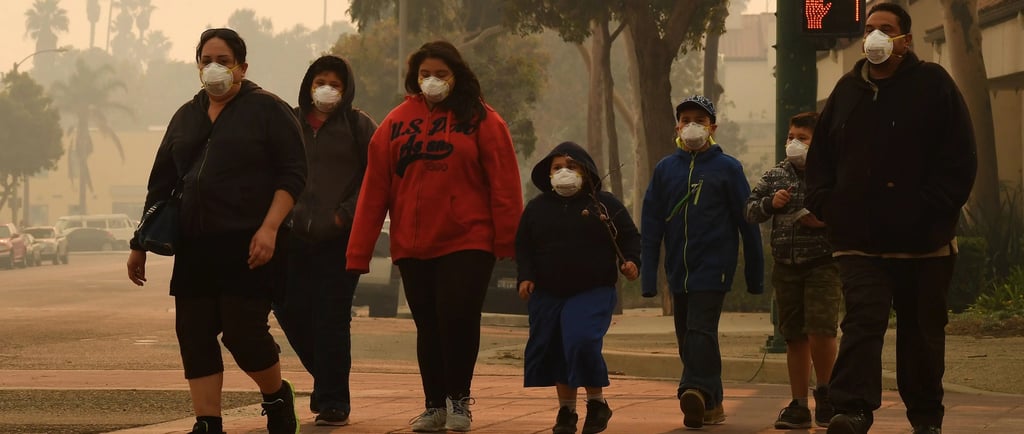
Wildfires are becoming more frequent and intense, sending dangerous smoke filled with fine particulate matter (PM2.5), soot, volatile organic compounds (VOCs), and toxic gases into homes hundreds of miles away. Protecting your indoor air is essential for health—especially for children, the elderly, and those with respiratory conditions.
Important Fact: Over 70% of fire-related insurance claims stem from smoke damage rather than direct flames. Smoke penetrates deep into porous materials, HVAC systems, fabrics, and walls, causing costly cleanup, odors, and long-term property damage.
Effective air filtration can dramatically reduce exposure. Here’s a breakdown of the main types of air filtration systems, what works best for wildfire smoke, and practical recommendations—including whether Costco options are worth it.
Classification of Air Filtration Systems
1. HEPA (High-Efficiency Particulate Air) Filters
These are the gold standard for capturing fine particles. True HEPA filters remove 99.97% of particles as small as 0.3 microns, including the PM2.5 and soot prevalent in wildfire smoke.
- Best for: Particulate matter (ash, soot).
- Limitations: Do not remove gases, odors, or VOCs.
- Look for: Genuine HEPA or True HEPA (avoid “HEPA-like” or “HEPA-type”). H13 or higher ratings are excellent.
2. Activated Carbon Filters
These use porous carbon to adsorb gases, odors, VOCs, and chemical compounds in smoke.
- Best for: Neutralizing the smell and toxic gases wildfire smoke leaves behind.
- Limitations: Poor at capturing fine particles without a HEPA layer. Carbon saturates over time and needs replacement.
- Tip: Pellet-based or thick carbon beds (2+ lbs) perform better than thin impregnated layers.
3. Hybrid/Multi-Stage Systems (HEPA + Carbon + Pre-Filters)
The most effective for wildfire smoke. They combine mechanical filtration (HEPA) with adsorption (carbon) and often pre-filters for larger debris. Many include smart sensors, app control, and air quality monitors.
- Examples: Winix, Levoit, Blueair, Coway, and Alen models.
4. MERV-Rated HVAC/Furnace Filters
These install in your home’s central heating/cooling system (MERV 13–16 recommended for smoke).
- Best for: Whole-house protection.
- Note: Higher MERV ratings (13+) capture more particles but can restrict airflow if your system isn’t designed for them.
5. DIY Solutions (e.g., Corsi-Rosenthal Box)
A box fan paired with 4–5 MERV-13 or higher HVAC filters. Inexpensive and highly effective for large volumes of air during heavy smoke events.
6. Other Technologies (Often Less Effective or Controversial)
- Ionic/Ionizers: Release ions to charge particles but can produce ozone (a lung irritant) and are less effective overall.
- UV-C Light: Kills microbes but does little for smoke particles or gases.
- Ozone Generators: Should be avoided indoors as they create harmful ozone.
Pro Tip: For wildfire smoke, prioritize True HEPA + substantial activated carbon with a strong fan (high CADR rating for smoke).
Are Costco Air Filters and Purifiers Good?
Costco offers affordable options like Winix, Shark, and Kirkland Signature HVAC filters that can be decent entry points.
What’s Good:
- Many Winix models (e.g., C909) combine True HEPA and carbon filters with PlasmaWave technology and are often on sale with extra filters.
- Kirkland HVAC filters perform reasonably well on dust, pollen, and smoke in Consumer Reports testing.
- Great value and convenience for budget-conscious buyers.
- Some models handle medium rooms effectively.
What’s Bad / Limitations:
- Carbon layers in many big-box models are often thin and saturate quickly during prolonged smoke events.
- Not all models have the strongest CADR ratings or largest carbon beds compared to premium units.
- Some users report filters needing frequent replacement in heavy smoke.
- Lower-end units may be noisier or less effective in large/open spaces.
Verdict: Costco options are good for mild-to-moderate smoke or as a starter, especially Winix models. For severe or recurring wildfire seasons, invest in higher-capacity units with more robust carbon filters (e.g., Austin Air, Alen, or IQAir).
Top Recommendations for Wildfire Smoke (2026)
- Best Overall: Coway Airmega Mighty or Blueair Blue Pure series — excellent particle clearance and efficiency.
- Best Value: Levoit Core 400S or Winix 5510 — strong HEPA + carbon, smart features.
- Heavy Smoke: Austin Air HealthMate or Alen models with thick carbon beds.
- Whole House: Upgrade HVAC to MERV 13–16 + portable units in key rooms.
- Budget/DIY: Corsi-Rosenthal Box for emergency high-volume cleaning.
Additional Tips for Maximum Protection
- Seal windows/doors and run purifiers on high during smoke events.
- Replace filters more frequently during fire season.
- Combine with home hardening (e.g., Talk to FFN professionals about pool pumps for exterior defense).
- Monitor indoor air quality with a PM2.5 sensor.
- Maintain your HVAC system and change filters regularly.
Don’t wait for the next wildfire. Investing in proper air filtration protects your health and can reduce long-term smoke damage costs. Check current models at trusted retailers, read recent lab tests (Consumer Reports, Wirecutter, HouseFresh), and choose based on room size and your budget.
Lasty, Don’t forget to stock a proper wearable mask such as the Sundstrom mask. Reach out via our whatsapp link for more information.
Recent Study Highlights the Hidden Dangers of Wildfire Toxins — Even Miles from the Burn Zone
Added after the original post:
A new peer-reviewed study published in Communications Earth & Environment (Nature) has delivered sobering findings for anyone living in wildfire-prone regions like Southern California.
Following the devastating Palisades and Eaton wildfires in January 2025, researchers from UC Davis and UCLA detected elevated levels of hexavalent chromium (Cr(VI)) — a potent carcinogen — in airborne particles collected in March 2025.
Key findings from the study:
- Average concentration of 13.7 nanograms per cubic meter (ng/m³) of hexavalent chromium.
- Most of the toxic metal was bound to ultrafine nanoparticles smaller than 56 nanometers — small enough to penetrate deep into the lungs and enter the bloodstream.
- These particles were detected miles downwind from active cleanup zones, potentially exposing millions of residents across Los Angeles County.
- While levels were below occupational safety limits, they significantly exceeded EPA residential air screening levels for cancer risk.
The study underscores a critical reality: wildfire smoke and post-fire debris cleanup don’t just release temporary particulate matter — they can mobilize dangerous heavy metals that linger in the air and travel far from the source.
Lead researchers emphasized that these ultrafine particles can circulate throughout the body, increasing risks of lung cancer, respiratory inflammation, asthma, and other long-term health issues.
Why This Matters for Your Home Air Filtration Strategy
This research reinforces why standard HVAC filters or basic purifiers often aren’t enough during and after wildfire season. Ultrafine particles (<100 nm) require high-efficiency filtration systems capable of capturing nanoparticles that many consumer filters miss.
For optimal protection, look for air purifiers that feature:
- True HEPA or HEPA-style filters rated for ultrafine particles
- Strong activated carbon layers to help adsorb toxic gases and volatile compounds
- High Clean Air Delivery Rate (CADR) specifically for smoke and particulates
- Optional medical-grade or PCO (photocatalytic oxidation) technology for enhanced toxin breakdown
Living in areas like Los Angeles, Malibu, Topanga, or the Santa Monica Mountains means wildfire-related air quality threats are no longer seasonal — they’re an ongoing reality. Investing in a quality air purifier isn’t just about comfort; it’s becoming an essential tool for long-term health protection.
Key Resources & Guides
- [HouseFresh: Top Air Purifiers for Wildfire Smoke (2026 Testing)](https://housefresh.com/air-purifiers-for-wildfire-smoke/) — Independent lab tests including DIY options
- [Consumer Reports: Best Air Purifiers for Wildfire Smoke](https://www.consumerreports.org/appliances/air-purifiers/best-air-purifiers-for-wildfire-smoke-a1153295134/)
- [Wirecutter / NYT: Best Furnace Filters (MERV 13 Recommendations)](https://www.nytimes.com/wirecutter/reviews/furnace-and-air-conditioner-filters-we-would-buy/)
Product Recommendations
- [Levoit Core 400S – Best Smart Option](https://levoit.com/collections/air-purifiers-for-wildfire-smoke)
- [Coway Airmega Mighty – Top Performer](https://cowaymega.com/)
- [Austin Air HealthMate – Heavy Smoke & VOCs](https://austinairsystems.com/products/healthmate)
- [Alen Air Purifiers for Wildfire Smoke](https://alen.com/collections/best-air-purifiers-for-wildfire-smoke)
- [Costco Winix Air Purifiers](https://www.costco.com/air-purifiers.html)
DIY & Budget Options
- [Official Corsi-Rosenthal Box Instructions](https://corsirosenthalfoundation.org/instructions/)
- [UC Davis: How to Build a Corsi-Rosenthal Box](https://engineering.ucdavis.edu/news/science-action-how-build-corsi-rosenthal-box)
HVAC & Whole-House Filtration
- [EPA: What MERV Rating Should You Use?](https://www.epa.gov/indoor-air-quality-iaq/what-merv-rating)
- [Filtrete MPR 1900 (MERV 13) – Recommended HVAC Filter](https://www.filtrete.com/)
Insurance & Smoke Damage Statistics
- [NFPA & Insurance Data on Smoke Damage (70%+ of claims)](https://www.nfpa.org/)
Additional Helpful Reads
- [AirPurifierFirst: Best Air Purifiers for Wildfire Smoke](https://www.airpurifierfirst.com/buying-guides/best-air-purifiers-for-wildfire-smoke/)
- [Mashable: Best Air Purifiers for Wildfire Smoke](https://mashable.com/roundup/best-air-purifier-wildfire-smoke)
- [Blueair: Wildfire Smoke & Air Purifiers Guide](https://www.blueair.com/blogs/news/wildfire-smoke-and-air-purifiers)